Impact Corridor
The plot shows the asteroid’s current impact corridor, stretching across a wide area from the western Atlantic towards Europe and the Mediterranean. It shows the range of possible impact locations, rather than a single predicted path, and shall narrow as more observations become available.
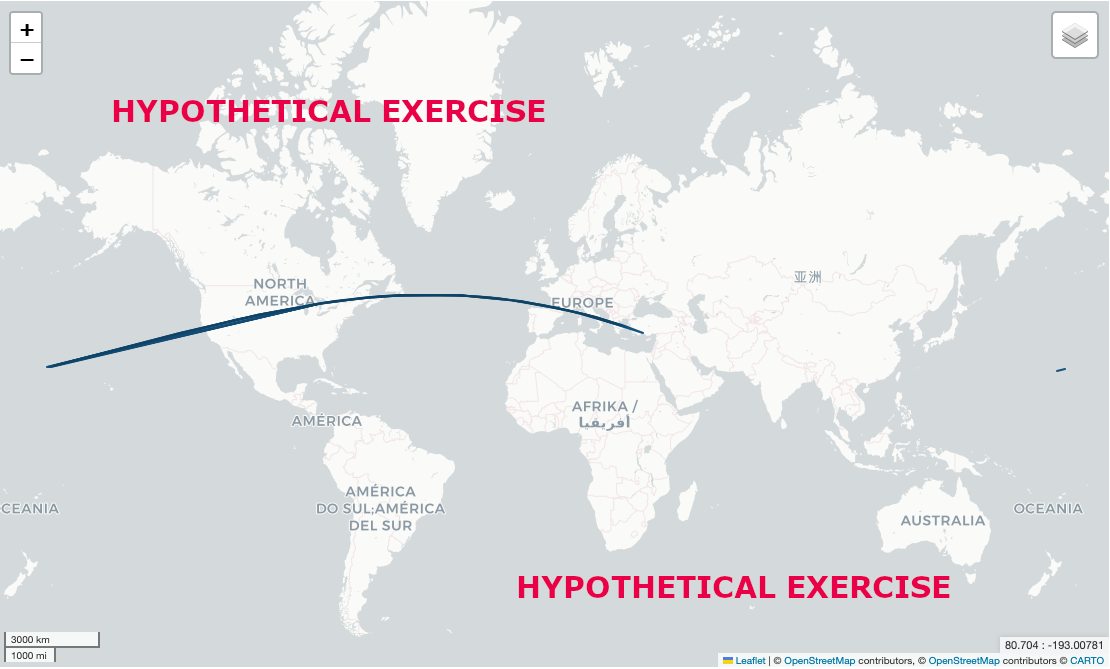
1 to 5-sigma entry corridor on the ground, without including the atmospheric effects. Credits: ESA / PDO
Impact Effects
This impact exercise explores what could happen if a S-type asteroid with an estimated diameter of 80 m and mass of approximately 6.4×10⁸ kg struck somewhere along the current impact corridor shown above. Naples is used as an example location only; it is not the predicted impact point. We analyse the possible effects of an impact in that area, including blast winds, thermal radiation, overpressure, fires, injuries, and structural damage. These results are illustrative and would change as the impact corridor narrows and the likely impact location becomes better understood. The exercise is intended to provide a clear indication of the potential hazards and support preparedness and response planning.
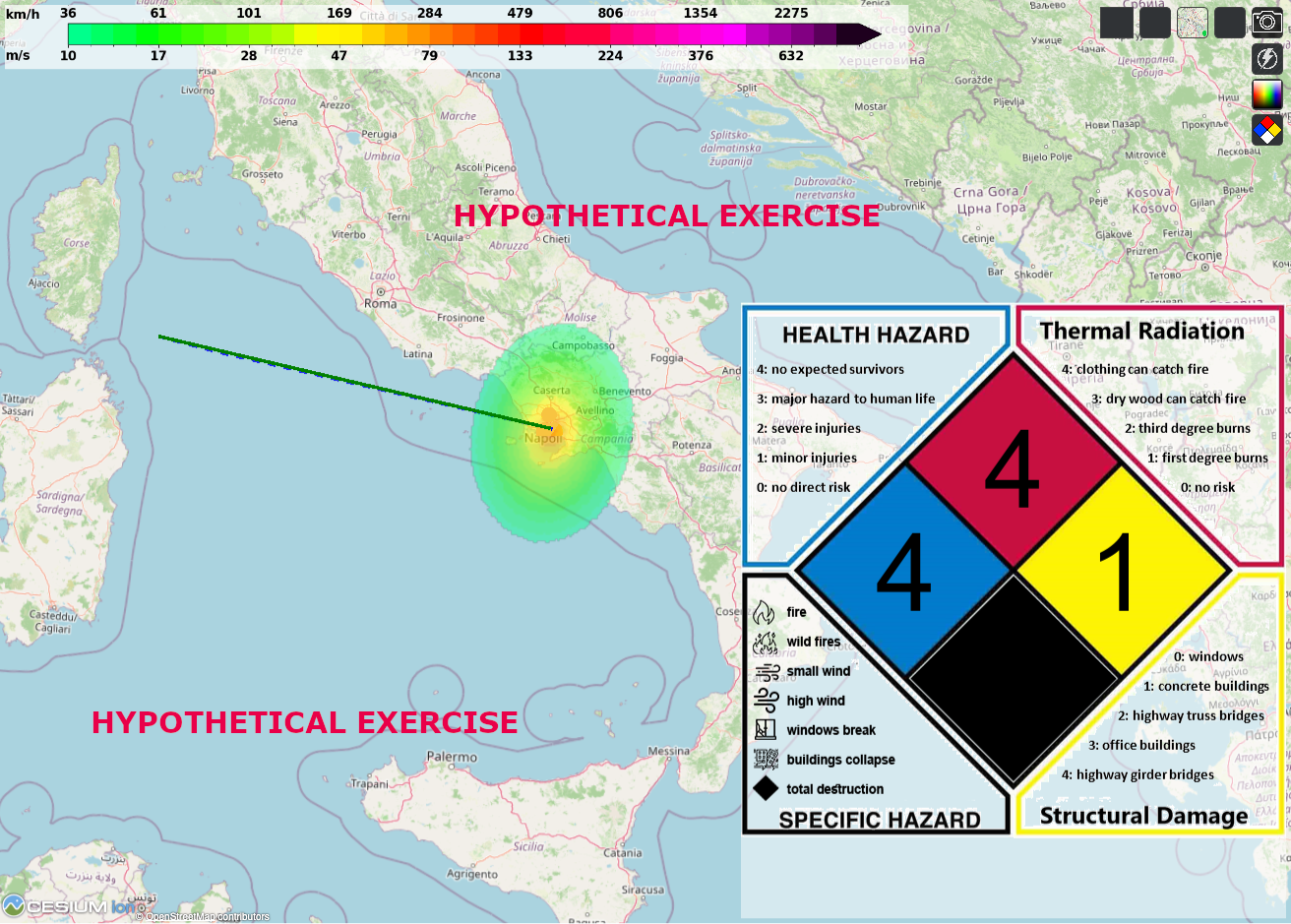
Simulated blast-wind speeds radiating from the impact site, with the most intense winds concentrated near Naples. Credits: ESA /PDO.

